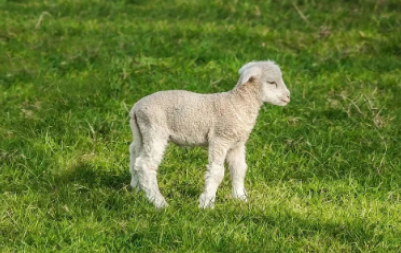
The purchased lambs in Shandong Province are mainly bought from places such as Jilin, Heilongjiang, Liaoning, Inner Mongolia in the east, and Qinghai in the northwest. Their average weight is generally around 25-50 kilograms. They are usually fattened for about 130-160 days. When their weight reaches around 120-140 kilograms, they are sold as live sheep.
At present, the main problems in local breeding are as follows:
First, the farmers have not received professional breeding training, which has led to a slow update of their breeding concepts. The proportion of feeding with alcohol residue is quite high in the local area because they sell live sheep. They pay little attention to the slaughter rate, believing that sheep with larger bellies are easier to sell. Additionally, the proportion of using soybean meal in the fattening period is very high. The protein content of the supplementary feed in the later stage mostly reaches over 16%. They think that feeding more soybean meal to the sheep will make them grow faster.
Second, the incidence of urinary calculi in local fattening sheep is relatively high. Chloride ammonium, urotropine, and products containing these ingredients such as "Ecological Treasure" are used frequently, but the effect is not satisfactory. The high incidence of urinary calculi in local sheep is closely related to insufficient water supply due to the insufficient length of water troughs, unreasonable calcium and phosphorus ratios in the diet, excessive protein content in the diet, excessive feeding of alcohol residue, and poor water quality. The local water has a high salt and alkalinity level. After being left for one day, it forms a layer of salt and alkali crystals on the surface of the water, making it salty and affecting the water intake of the sheep. Some mineral ions in the water are also one of the causes of urinary calculi.
Third, the fattening feed used in the local area has not undergone professional nutritional ratio calculation. The variety is chaotic, mainly including premixes from the surrounding areas of Shandong, fattening concentrated feeds, soybean meal, roasted soybeans, expanded soybeans, raw peas, corn, peanut stalks, garlic skins, alcohol residue, and many fermented feeds, probiotics, and a wide variety of growth promoters and anti-urinary calculi additives, etc. The chaotic variety leads to a slow growth rate of fattening sheep.
Given the various problems that have arisen in the breeding of fattening sheep in Shandong, some farmers have contacted us voluntarily, hoping that we can provide solutions. As the period of high incidence of urinary calculi in local sheep is approaching, we have focused on the prevention and reduction of calculi. Through the ingredients such as rumen-aging vitamins, rumen-aging glucose, rumen-aging amino acids, and rumen-aging choline added in the Yahe products, we have helped farmers solve various problems such as calcium oxalate stones in sheep, slow growth, etc., bringing significant benefits to the farmers.
In addition, for some farmers who are willing to accept new concepts, we have adjusted their concentrate feed and diet formulas. For example, reducing the proportion of liquor feed in the later stage and increasing the amount of soybean meal added in the later stage, allowing the farmers to freely lick baking soda, ensuring the proportion of Yahe premixes added, etc. We have also communicated with them about some problems in the feeding process and guided them to change their concepts. By combining short-term and long-term effects, we have enabled farmers to see the value brought by the efficacy and service of our products, thereby expanding the user base and the number of distributors, and ultimately forming the brand effect of Yahe.